Healthy aging begins with the right nutrition.
As cats grow older, their nutritional needs often change.
Some lose muscle mass.
Others become less active.
Many drink less water than they need.
Because cats often hide signs of illness, subtle changes in appetite, body weight, or eating habits deserve attention—especially during the senior years.
Recognizing these small changes early can help owners have more informed conversations with their veterinarian.
At the same time, pet stores offer dozens of foods labeled:
At first glance, many appear very similar.
Yet their ingredients, calorie density, moisture content, protein quality, and nutritional goals can vary considerably.
The goal isn't to find the most expensive food. It's to understand which food best fits your individual cat.
This guide will help you compare senior cat foods objectively so you can make informed decisions together with your veterinarian.
Is This Guide Right for You?
This guide is designed for owners who are:
It may also be helpful before discussing nutrition with your veterinarian.
Main Idea
There is no single “best” senior cat food. The right choice depends on your cat's age, body condition, activity level, medical history, and nutritional needs.
Key Takeaway
Cats have unique nutritional requirements. Choosing food based on nutritional quality — not marketing claims — is often the best place to start.
Why It Matters
Good nutrition supports healthy aging, muscle maintenance, hydration, and overall quality of life throughout the senior years.
What You'll Learn
In this guide you'll discover:
The Basics
Understanding Senior Cat Foods
Cats remain obligate carnivores throughout life.
As they age, maintaining muscle mass, hydration, and appropriate calorie intake often becomes increasingly important.
The best food is the one that matches your individual cat — not simply one labeled “Senior.”
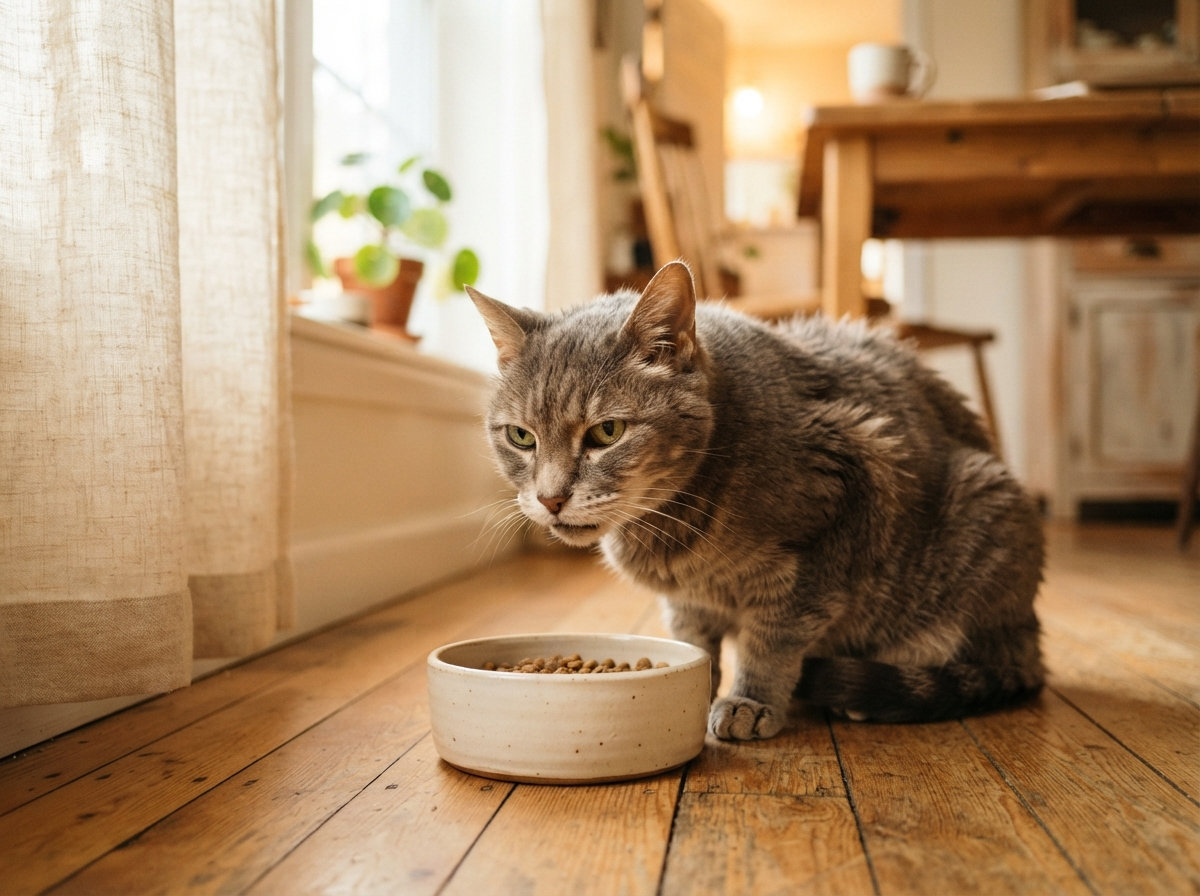
Comfortable mealtimes become even more important as cats grow older.
A calm feeding environment and nutrition that matches your cat's changing needs can support healthy aging, hydration, and everyday well-being.
Key Nutrients
What Actually Matters
Evaluation Framework
How We Compare Senior Cat Foods
Every future comparison follows the Happy Senior Pet Evaluation Framework.
Protein quality
What is the primary protein source and how clearly is it identified for obligate carnivores?
Moisture content
How much moisture does the food provide and how does that support hydration?
Calorie density
How many calories does each serving provide to support healthy weight in less active seniors?
Ingredient transparency
Does the label clearly list all ingredients, protein sources, and their origins?
Omega-3 inclusion
Are omega-3 fatty acids included, what sources, and in what amounts?
Digestibility
Does the formula consider digestibility, nutrient absorption, and sensitive senior stomachs?
Palatability
Will your cat actually eat the food consistently? Cats can be highly selective, especially as they age. Even a nutritionally excellent diet cannot provide its intended benefits if it is not willingly eaten. Acceptance and long-term consistency are therefore important considerations when comparing foods.
Life-stage suitability
Is the product formulated and labeled with appropriate guidance for senior cats?
Manufacturer transparency
Does the company share information about sourcing, manufacturing, and quality testing?
Feeding guidance
Are portion recommendations clear, based on weight, and easy to adjust?
Value per daily serving
What does it actually cost to feed per day, not just per bag or can?
Practical Tool
Quick Comparison Checklist
Before choosing a senior cat food, check whether the label clearly provides:
The more transparent the manufacturer, the easier it becomes to compare products with confidence.
Questions to Ask Before Buying
Marketing Claims Explained
Many foods advertise:
These phrases may sound reassuring but do not automatically indicate better nutrition.
Understanding the nutritional profile is often more valuable than focusing on marketing language.
Keep Exploring
Related Resources
Learn More
Future Care Pathways
Choosing with Confidence
The best senior cat food isn't necessarily the one with the biggest marketing budget.
It's the one that supports your cat's nutritional needs, encourages healthy aging, and fits comfortably into your long-term care plan.
Helping owners make thoughtful nutrition decisions — not confusing ones — is exactly why we created this guide.
Our Editorial Promise
Happy Senior Pet does not recommend products based on advertising or sponsorship.
Our goal is to help owners understand the available options, compare products objectively, and have better conversations with their veterinarian.
Education always comes before recommendations.
Looking Ahead
Future comparison tables will include:
Every comparison will follow the same methodology described in How We Help You Choose Products.