Everyday Habits That Support a Healthy Brain
Small Daily Choices That Can Make a Meaningful Difference
When people think about brain health, they often imagine special diets or expensive supplements.
But many of the habits that support a healthy brain happen during ordinary moments.
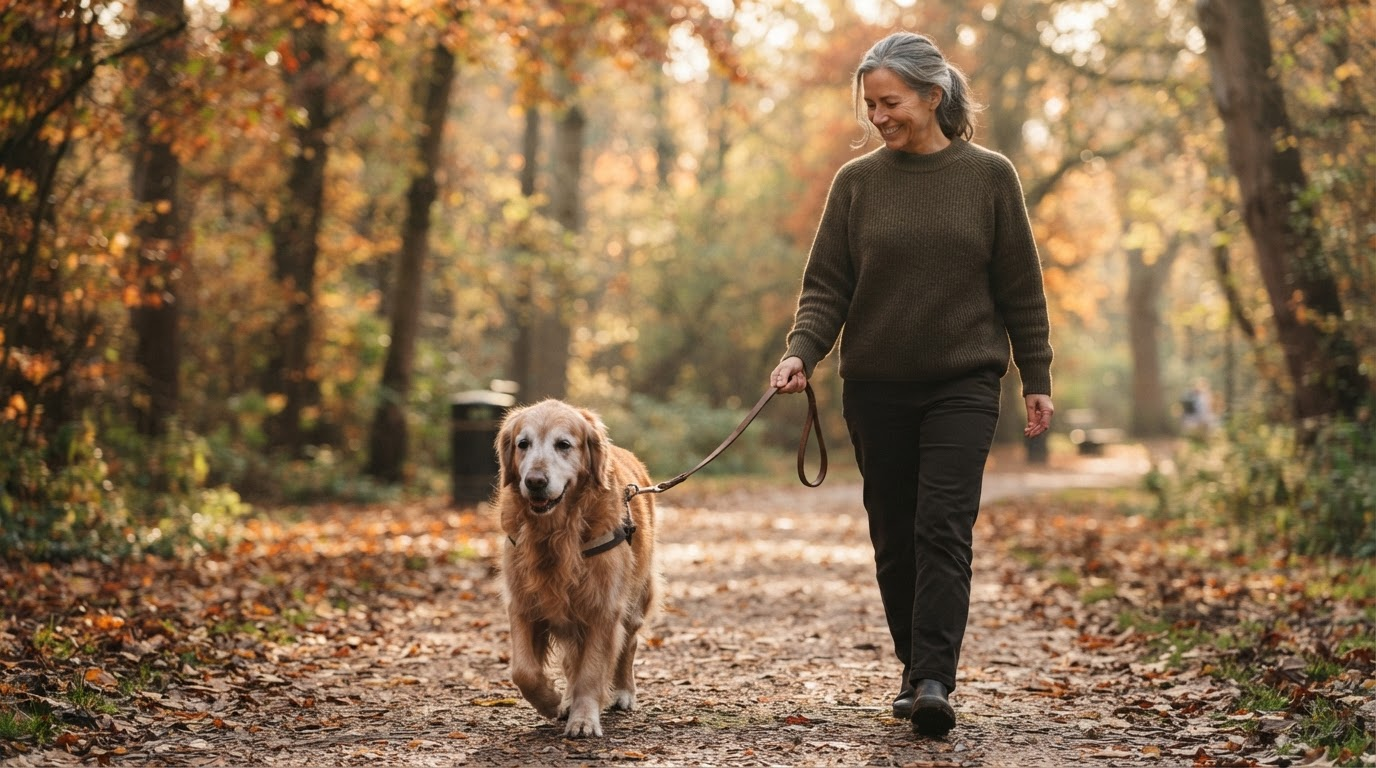
A morning walk.
A familiar bedtime routine.
A favorite game.
A few quiet minutes spent together.
Researchers increasingly believe that healthy brain aging is influenced not by one dramatic change, but by hundreds of small experiences repeated over many years.
No single habit can prevent aging.
However, together these daily choices may help support curiosity, confidence, and quality of life throughout the senior years.
The goal is not to keep your dog young forever.
The goal is to help every stage of life remain meaningful.
Brain Snapshot
Main Idea
Healthy brain aging is supported by consistent daily habits rather than dramatic interventions.
Key Takeaway
Exercise, sleep, mental enrichment, social interaction, routine, and nutrition all work together to support lifelong cognitive health.
Why It Matters
Small daily habits are often easier to maintain than major lifestyle changes—and consistency may matter more than intensity.
In this chapter you'll learn:
- Why movement supports the brain.
- The importance of sniffing and exploration.
- How mental enrichment keeps the brain engaged.
- Why sleep deserves more attention.
- The value of predictable routines.
- How social interaction supports emotional well-being.
- Simple habits you can begin today.
Movement Is Brain Exercise Too
Regular physical activity benefits more than muscles and joints.
Movement increases opportunities to explore the environment, experience new smells, interact with family members, and engage the brain.
Daily walks do not need to be long or strenuous.
For many senior dogs, gentle, consistent movement is far more valuable than occasional intense exercise.
Never Underestimate the Power of Sniffing
Dogs experience the world primarily through their noses.
Allowing time to sniff during walks is not "wasting time."
It is mental enrichment.
Exploring new scents encourages the brain to process information, solve problems, and stay engaged with the environment.
Sometimes the slowest walk provides the richest mental workout.
Keep Learning Together
The brain continues learning throughout life.
Senior dogs can still enjoy:
simple training sessions,
food puzzles,
scent games,
gentle problem-solving activities,
exploring new environments at a comfortable pace.
Learning does not need to be complicated.
A few enjoyable minutes each day are often enough.
Sleep Matters More Than Many Owners Realize
Good sleep allows both the body and brain to recover.
If your dog suddenly develops significant changes in sleep patterns, discuss them with your veterinarian.
Supportive sleep habits
Comfortable bedding
Pain management when needed
Predictable evening routines
These may all contribute to better rest.
Routine Creates Confidence
One lesson appears throughout brain-aging research:
Predictability reduces unnecessary stress.
Meals at similar times.
Regular walks.
Familiar sleeping areas.
Consistent family routines.
These habits help many senior dogs feel secure and confident as they navigate daily life.
Brain Health Tip
The best routine is one your dog enjoys and you can realistically maintain.
Simple habits practiced consistently are usually more valuable than ambitious routines that quickly disappear.
What This Means for You
You do not need to redesign your dog's entire life.
Many of the most supportive habits are already part of your daily routine.
Healthy aging is built one ordinary day at a time.
What You Can Do Today ❤️
- Take one relaxed walk that allows plenty of sniffing.
- Spend five minutes playing a simple thinking game.
- Keep mealtimes and bedtime consistent.
- Make sure your dog has a quiet, comfortable place to sleep.
- Enjoy time together without rushing.
Separating myths from what helps
Myth
“Older dogs should avoid learning new things.”
Fact
Many senior dogs continue enjoying gentle learning and enrichment throughout life.
Myth
“A long walk is always better than a slow walk.”
Fact
Mental engagement through sniffing and exploration can be just as valuable as distance.
Myth
“Brain health depends only on nutrition.”
Fact
Nutrition is one important piece of a much larger picture that includes movement, sleep, companionship, and routine.
Everyday Brain Health Checklist
Your dog does not measure life by the number of years lived.
He measures it by the moments you share together.
Healthy aging is not about avoiding change.
It is about continuing to fill each day with comfort, curiosity, and connection.
Remember this
You have completed the Brain & Cognitive Health Guide.
You now understand:
Next Guide — Nutrition Guide
While brain health depends on good nutrition, food influences every organ in the body.
Our next guide explores senior nutrition in greater depth—from protein and healthy fats to hydration, digestion, weight management, and understanding pet food labels.
Because every healthy meal is another opportunity to support a longer, happier life.
Love Is Part of Brain Health
Scientific research often focuses on nutrition and biology.
But every owner knows another important truth.
Dogs thrive on companionship.
Gentle affection.
Shared experiences.
Quiet moments together.
Social interaction may not appear on a nutrition label, but it remains one of the most meaningful parts of healthy aging.