Evidence Snapshot
Overall Evidence
Several canine clinical studies report improvements in mobility and comfort, although results are not entirely consistent and further high-quality research is still needed.
Best Supported Use
Supporting mobility and comfort in dogs with osteoarthritis as part of a multimodal management program.
Scientific Consensus
Promising evidence supports its use as an adjunct nutritional therapy, but it should not be viewed as a replacement for established veterinary treatment.
A Unique Marine Ingredient for Joint Health
Among the many supplements marketed for arthritis, Green-Lipped Mussel (GLM) stands apart.
Unlike glucosamine or chondroitin, which are individual compounds, Green-Lipped Mussel is a whole-food marine ingredient containing a naturally occurring combination of omega-3 fatty acids, proteins, amino acids, glycosaminoglycans, vitamins, minerals, and other bioactive substances. Rather than relying on a single active ingredient, its potential benefits appear to result from the interaction of many naturally occurring compounds working together.
Over the past two decades, Green-Lipped Mussel has attracted increasing interest from veterinary researchers. Several clinical studies in dogs have suggested that certain high-quality Green-Lipped Mussel supplements may help improve mobility and reduce signs of discomfort associated with osteoarthritis. While the evidence is not definitive, it is promising enough that many veterinarians now consider it a useful option within a comprehensive joint-care program.
As with every supplement discussed in this guide, however, it's important to separate scientific evidence from marketing claims.
Green-Lipped Mussel is not a cure for arthritis, nor does it regenerate severely damaged cartilage. Instead, it is best viewed as one of several nutritional tools that may help support long-term joint comfort when combined with weight management, appropriate exercise, environmental modifications, and veterinary care.
Understanding why this shellfish has generated so much scientific interest begins with understanding what makes it different from other joint supplements.
What Is Green-Lipped Mussel?
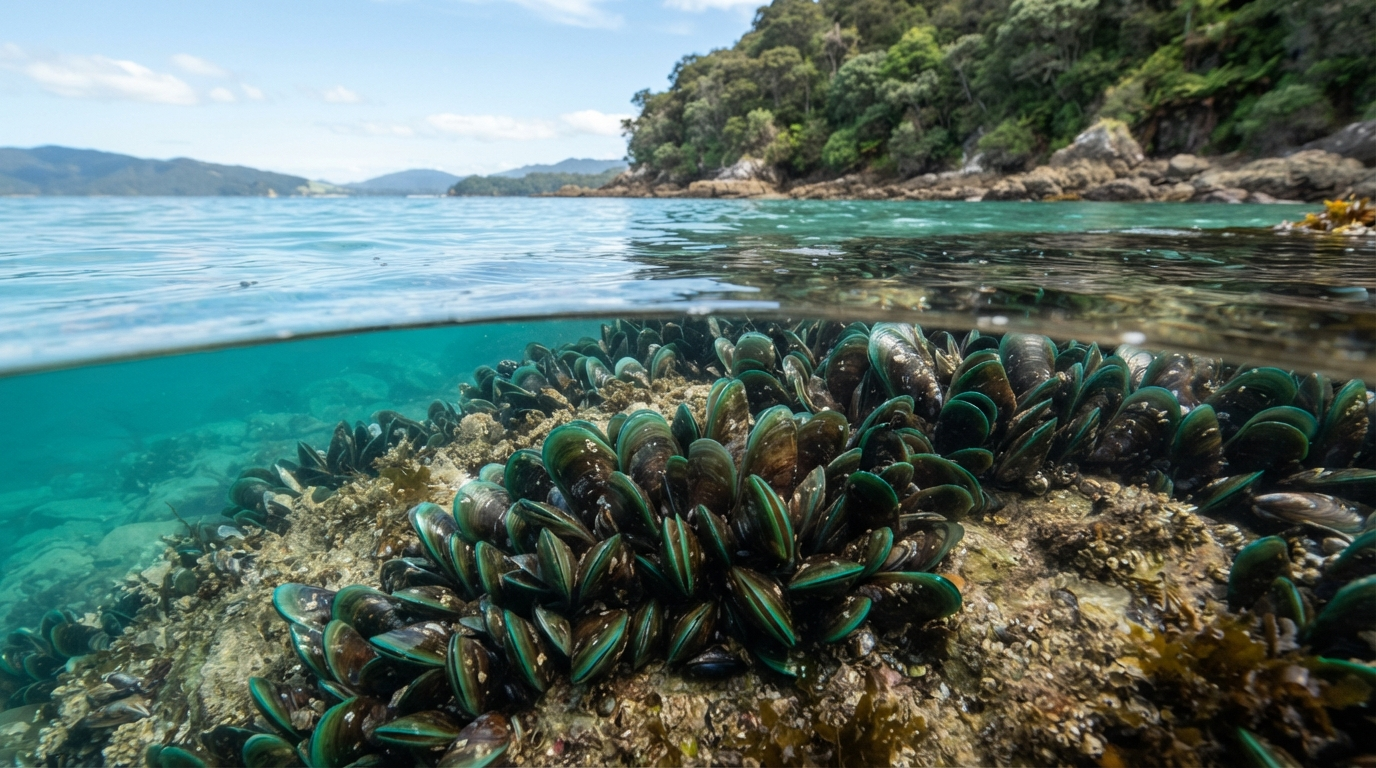
Green-Lipped Mussel (Perna canaliculus) is a species of mussel native to the pristine coastal waters of New Zealand. It gets its common name from the distinctive green edge that runs along the shell.
Unlike many shellfish harvested from the wild, most Green-Lipped Mussels used in veterinary supplements are sustainably farmed in carefully managed marine environments. Strict environmental controls and New Zealand's aquaculture standards help maintain product quality while supporting responsible harvesting practices.
Originally, scientists became interested in these mussels after observing that some coastal Māori communities, whose traditional diets included large amounts of Green-Lipped Mussel, appeared to have lower rates of certain inflammatory joint conditions than expected. Although many factors influence human health and these observations cannot prove cause and effect, they sparked decades of research into the mussel's unique nutritional composition.
Today, Green-Lipped Mussel extracts are used in supplements for both people and companion animals around the world.
What Makes Green-Lipped Mussel Different?
Most joint supplements focus on one primary ingredient.
For example:
- Glucosamine provides building blocks involved in cartilage maintenance.
- Chondroitin helps support cartilage structure and water retention.
- Fish oil primarily supplies EPA and DHA, two well-known marine omega-3 fatty acids.
Green-Lipped Mussel is different because it naturally contains multiple categories of biologically active compounds within a single ingredient.
Researchers have identified components including:
- Omega-3 fatty acids (including EPA and DHA)
- Less common marine lipids that are not typically found in standard fish oil
- Glycosaminoglycans (natural components involved in cartilage structure)
- Amino acids and proteins
- Vitamins and trace minerals
- Naturally occurring antioxidants
Scientists believe this diverse nutritional profile may explain why Green-Lipped Mussel appears to influence joint health through multiple biological pathways rather than a single mechanism.
Instead of asking whether one molecule is responsible for its effects, researchers increasingly study how these naturally occurring compounds may work together.
This concept is sometimes referred to as the food matrix effect — the idea that the health effects of a whole food may differ from those of its individual isolated components. While this remains an active area of research, it helps explain why Green-Lipped Mussel cannot simply be considered 'fish oil with glucosamine.'
More Than Another Source of Omega-3
A Common Misconception
One of the most common misconceptions is that Green-Lipped Mussel is simply another way of delivering omega-3 fatty acids.
While it does contain EPA and DHA, its nutritional profile is considerably more complex.
Researchers have identified additional marine lipids that may possess anti-inflammatory properties distinct from those found in conventional fish oil. Some laboratory studies suggest these compounds may influence inflammatory pathways in different ways, although their exact roles continue to be investigated.
This doesn't necessarily make Green-Lipped Mussel better than fish oil — it simply means they are different.
Fish oil remains one of the most extensively researched supplements for canine osteoarthritis, with substantial evidence supporting its use in appropriate cases. Green-Lipped Mussel, meanwhile, offers a broader mixture of naturally occurring compounds that may provide complementary benefits for some dogs.
Rather than viewing the two supplements as competitors, many veterinarians consider them different tools that may fit into an individualized joint-health strategy depending on the patient's needs.
Setting Realistic Expectations
Green-Lipped Mussel has earned growing scientific interest because several studies suggest it may improve mobility and comfort in some dogs with osteoarthritis.
However, expectations should remain realistic.
Key points for pet parents:
- Not every dog responds.
- Benefits usually develop gradually over several weeks.
- Product quality varies considerably.
- And no supplement — regardless of marketing claims — can reverse advanced arthritis or regenerate severely damaged cartilage.
Instead, Green-Lipped Mussel should be viewed as one component of a broader approach that also includes maintaining a healthy body weight, regular low-impact exercise, physical rehabilitation when appropriate, environmental modifications, and veterinary guidance.
Understanding how Green-Lipped Mussel may influence inflammation inside the joint helps explain why researchers continue to study this remarkable marine ingredient.
How Does Green-Lipped Mussel Work?
One reason Green-Lipped Mussel has attracted growing attention in veterinary medicine is that it appears to influence joint health through multiple biological pathways rather than a single mechanism.
Unlike glucosamine, which primarily provides building blocks involved in cartilage maintenance, Green-Lipped Mussel contains a naturally occurring mixture of marine compounds that may affect inflammation, cartilage metabolism, and overall joint function simultaneously.
Researchers continue to study exactly how these compounds interact within the body. While many questions remain unanswered, several mechanisms have emerged consistently in laboratory and clinical research.
Supporting a Healthy Inflammatory Response
Inflammation is a normal part of the body's repair process. Following an injury, inflammatory signals help recruit immune cells that remove damaged tissue and begin healing.
In osteoarthritis, however, inflammation does not simply disappear after the initial injury. Instead, a low-grade, persistent inflammatory process develops inside the joint. Over months or years, this ongoing inflammation contributes to cartilage breakdown, discomfort, stiffness, and reduced mobility.
Scientists believe Green-Lipped Mussel may help support a healthier inflammatory balance by providing several naturally occurring marine lipids that interact with inflammatory pathways.
Some laboratory studies suggest these compounds may influence the production of inflammatory mediators involved in osteoarthritis. Rather than completely blocking inflammation — which would interfere with normal healing — the goal is to help reduce excessive inflammatory activity while allowing the body's normal protective processes to continue.
This distinction is important.
Healthy inflammation is necessary.
Chronic inflammation is harmful.
Supporting the body's ability to maintain balance is very different from attempting to eliminate inflammation altogether.
More Than EPA and DHA
Most pet owners associate marine supplements with EPA and DHA, the two omega-3 fatty acids found in fish oil.
Green-Lipped Mussel certainly contains both.
However, researchers have identified additional marine fatty acids that are uncommon in conventional fish oil supplements. These include several omega-3 compounds that continue to be investigated for their potential biological activity.
Scientists are still learning how these less familiar lipids contribute to joint health, but they may help explain why Green-Lipped Mussel sometimes produces results that cannot be attributed to EPA and DHA alone.
This remains an active area of research, and current evidence continues to evolve.
A Whole-Food Approach
One reason Green-Lipped Mussel is particularly interesting is that researchers increasingly study it as a food matrix rather than as a collection of isolated nutrients.
Instead of asking:
“Which single ingredient is responsible?”
Scientists increasingly ask:
“How do all of these naturally occurring compounds work together?”
This reflects a broader shift within nutritional science.
Many whole foods appear to produce biological effects that cannot be fully explained by any one isolated nutrient. The interaction among proteins, fats, minerals, antioxidants, and other naturally occurring compounds may influence how the body absorbs and utilizes those nutrients.
Although much remains to be learned, Green-Lipped Mussel serves as an excellent example of why nutrition is often more complex than identifying one "magic ingredient."
Supporting Joint Function Rather Than Rebuilding Cartilage
Another important point is that Green-Lipped Mussel should not be viewed as a cartilage-regenerating therapy.
Current research suggests its greatest potential lies in supporting overall joint function rather than rebuilding damaged tissue.
For some dogs, this may mean:
- More comfortable movement
- Improved willingness to exercise
- Less stiffness after rest
- Better day-to-day mobility
- Improved quality of life
These are meaningful goals for senior dogs living with osteoarthritis.
They are also realistic goals.
No supplement has been shown to restore severely damaged cartilage to its original condition.
Instead, the focus is helping dogs remain active, comfortable, and engaged in everyday life for as long as possible.
Why Researchers Remain Interested
Green-Lipped Mussel occupies an interesting position within veterinary nutrition.
The scientific evidence is not yet as extensive as it is for fish oil.
At the same time, several well-designed canine studies have reported improvements in mobility and comfort, while laboratory research continues to uncover additional biologically active compounds within the mussel itself.
This combination of encouraging clinical findings and ongoing scientific discovery explains why Green-Lipped Mussel continues to receive growing attention from veterinary researchers around the world.
The next question, however, is the one that matters most to pet owners:
Do these promising biological mechanisms actually translate into meaningful improvements for dogs living with arthritis?
The answer lies in the veterinary clinical studies, which we'll examine next.
What Does the Research Say?
Ultimately, the question most pet parents ask is simple:
Does Green-Lipped Mussel actually help dogs with arthritis?
The short answer is it may help some dogs, and the current evidence is encouraging — but it is not yet as extensive or as consistent as the evidence supporting some other joint-management strategies.
Over the past two decades, several veterinary clinical studies have evaluated Green-Lipped Mussel in dogs with naturally occurring osteoarthritis. While the study designs have varied, many have reported improvements in mobility, comfort, and overall activity compared with baseline or placebo groups.
Importantly, these improvements have generally been modest rather than dramatic.
For many dogs, the goal is not eliminating arthritis but making everyday life more comfortable. A dog that rises more easily after resting, walks farther without tiring, or appears more willing to play may experience a meaningful improvement in quality of life — even if arthritis has not disappeared.
What Have Clinical Studies Found?
Although results vary among studies, veterinary research has reported several potential benefits in some dogs receiving Green-Lipped Mussel supplements.
These include:
- Improved mobility
- Reduced stiffness after periods of rest
- Greater willingness to exercise
- Improved weight-bearing on affected limbs
- Better owner-assessed comfort and quality of life
Some studies have also documented improvements using veterinary orthopedic examinations rather than relying solely on owner observations, providing additional confidence that at least part of the reported benefit reflects genuine functional improvement.
However, not every study has demonstrated statistically significant benefits, and not every dog responds equally.
This is common in nutritional research, where many biological and environmental factors influence the outcome.
Why Do Study Results Differ?
One reason Green-Lipped Mussel research can appear inconsistent is that not all supplements are the same.
Several factors may influence study results, including:
- Differences in manufacturing methods
- Variations in processing temperatures
- Stability of delicate marine lipids
- Amount of active ingredients
- Product purity
- Dosage used
- Duration of treatment
- Severity of arthritis in participating dogs
Because Green-Lipped Mussel contains numerous naturally occurring compounds, processing methods may significantly influence the final product.
Heat, oxidation, or poor storage conditions can reduce the concentration of some biologically active components before the supplement even reaches the consumer.
This is one reason why results obtained with one commercial preparation cannot automatically be applied to every product on the market.
Which Dogs May Benefit Most?
Current evidence suggests that Green-Lipped Mussel may be most useful for dogs with mild to moderate osteoarthritis, particularly when introduced as part of a comprehensive long-term management plan.
It may also be considered for:
- Senior dogs beginning to show age-related stiffness
- Active dogs with increased joint wear
- Dogs recovering from orthopedic injury under veterinary supervision
- Dogs already receiving multimodal arthritis management
Because arthritis develops gradually, introducing nutritional support before severe disability occurs may help maintain mobility for longer, although research continues to explore the ideal timing.
As always, supplementation should complement — not replace — veterinary diagnosis and treatment.
How Veterinarians View the Evidence
Most veterinary specialists view Green-Lipped Mussel as a potentially useful adjunct therapy.
In other words, it is considered one tool among many.
Rather than relying on a single supplement, veterinarians often combine several evidence-informed strategies, including:
- Weight management
- Regular low-impact exercise
- Physical rehabilitation
- Environmental modifications
- Pain management when needed
- Nutritional support through selected supplements
This multimodal approach reflects the reality that osteoarthritis is a complex disease requiring multiple complementary strategies rather than one universal solution.
The encouraging research surrounding Green-Lipped Mussel fits well within this broader philosophy of care.
Is Green-Lipped Mussel Safe?
For most healthy dogs, Green-Lipped Mussel is considered to have a favorable safety profile when used according to veterinary recommendations.
Reported side effects are generally uncommon and, when they occur, are usually mild.
Possible side effects may include:
- Mild digestive upset
- Soft stools
- Temporary diarrhea
- Reduced appetite in sensitive individuals
Dogs with known shellfish allergies may require special consideration, although confirmed shellfish allergy in dogs appears to be relatively uncommon.
As with any supplement, pet parents should consult their veterinarian before introducing Green-Lipped Mussel, particularly if their dog has chronic medical conditions or receives prescription medications.
Choosing a Quality Supplement
Because Green-Lipped Mussel products vary considerably, choosing a reputable manufacturer is important.
When evaluating a supplement, look for companies that:
- Clearly identify Green-Lipped Mussel (Perna canaliculus) as the ingredient
- Follow quality-control standards
- Use manufacturing methods designed to preserve delicate marine compounds
- Provide transparent ingredient information
- Manufacture products intended specifically for veterinary use when appropriate
Extremely inexpensive products may contain lower concentrations of active ingredients or use processing methods that reduce biological activity.
As with many nutritional supplements, quality often matters as much as the ingredient itself.
Veterinary Insight
Veterinarians rarely recommend Green-Lipped Mussel because they expect it to "cure" arthritis.
Instead, it is often selected because even modest improvements in comfort and mobility can significantly improve a dog's daily quality of life when combined with appropriate weight management, exercise, rehabilitation, and medical care.
Myth vs. Fact
Myth
Green-Lipped Mussel rebuilds worn-out cartilage.
Fact
Current evidence suggests it may help support joint comfort and mobility, but it has not been shown to regenerate severely damaged cartilage.
Myth
Green-Lipped Mussel is simply another type of fish oil.
Fact
Although it contains EPA and DHA, it also provides numerous additional marine lipids and naturally occurring nutrients that make it biologically distinct.
Myth
Every dog with arthritis will improve.
Fact
Individual responses vary. Some dogs experience noticeable improvement, while others show little or no measurable benefit.
Frequently Asked Questions
Evidence Snapshot
Overall Evidence
Several canine clinical studies report improvements in mobility and comfort, although results are not entirely consistent and further high-quality research is still needed.
Best Supported Use
Supporting mobility and comfort in dogs with osteoarthritis as part of a multimodal management program.
Scientific Consensus
Promising evidence supports its use as an adjunct nutritional therapy, but it should not be viewed as a replacement for established veterinary treatment.
Key Takeaways
- 1Green-Lipped Mussel is a unique whole-food marine ingredient—not simply another omega-3 supplement.
- 2It appears to influence joint health through multiple biological pathways.
- 3Several veterinary studies suggest it may improve mobility and comfort in some dogs.
- 4Benefits are generally gradual and vary among individuals.
- 5Product quality plays an important role.
- 6Green-Lipped Mussel works best as one component of a comprehensive arthritis management plan that includes veterinary care, weight management, exercise, and environmental support.
Continue Reading
Glucosamine & Chondroitin
Understanding two of the most widely used joint-support nutrients.
Read chapterSupplement Guide
Return to the full guide overview and table of contents.
Browse all chaptersMSM (Methylsulfonylmethane)
A sulfur-containing compound commonly included in joint supplements for supporting connective tissues.
Read Part 1